 it
it  de
de  fr
fr  EN
EN
It all began 30 years ago, in 1991, when in Comacchio - a land known in the past for the clouds of mosquitoes that infested the area - this project, still active today, was born to combat culicides in the coastal tourist resorts of Emilia Romagna: in a nutshell, the project to combat mosquitoes on the Comacchio shores and the northern resorts of the municipality of Ravenna.
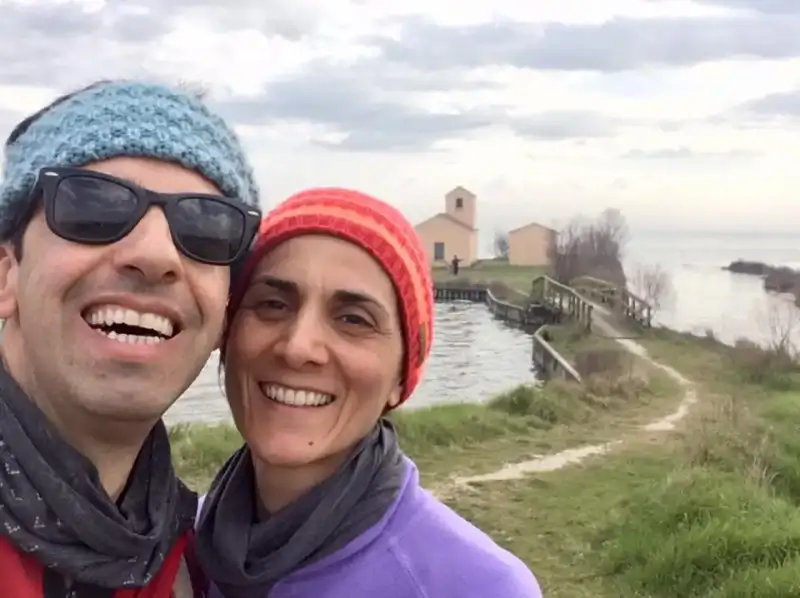
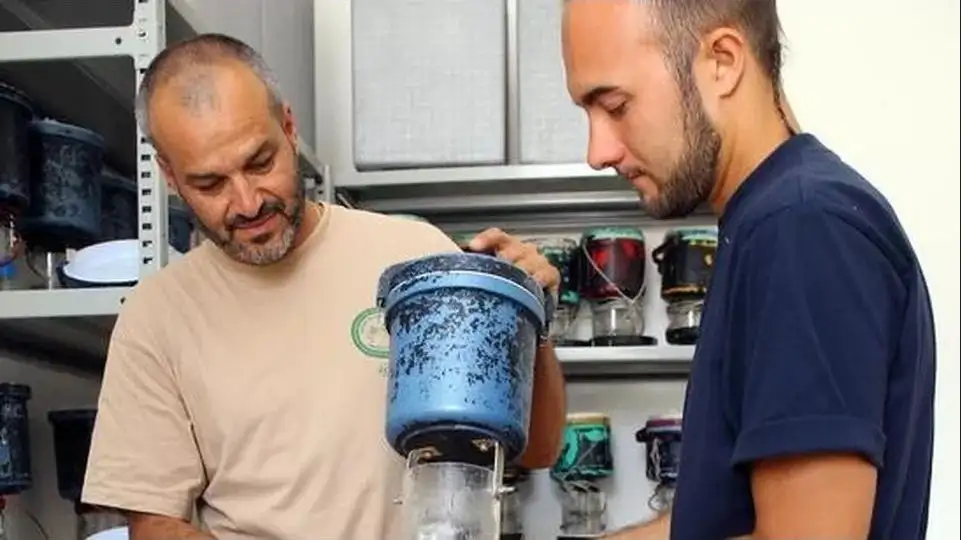
At the time, I had just graduated; I was playing basketball and directing this project was my very dear friend, my former coach, Roberto Pantaleoni, who basically brought this facility to life in Comacchio, with the collaboration of Professor Giorgio Celli of the University of Bologna. I had just graduated, I said; he was looking for a technician to support him on the field in this work, and he knew me because he had precisely coached me, as a young boy, in basketball. Pantaleoni asked me if I would be interested in working together with him on the mosquito control project in Comacchio: I accepted; it was supposed to be a collaboration of a little month, not more, instead, in the end, after 30 years I am still here, at the management, as the most experienced member.
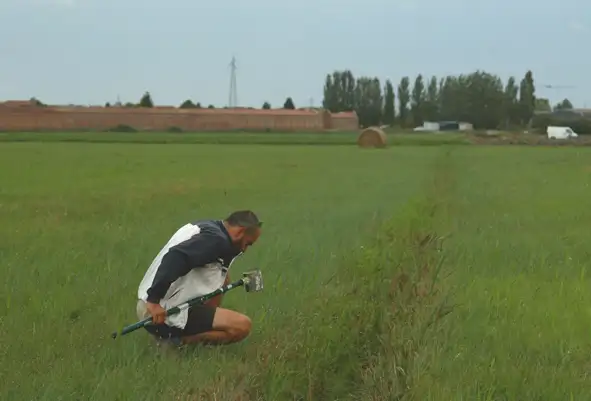
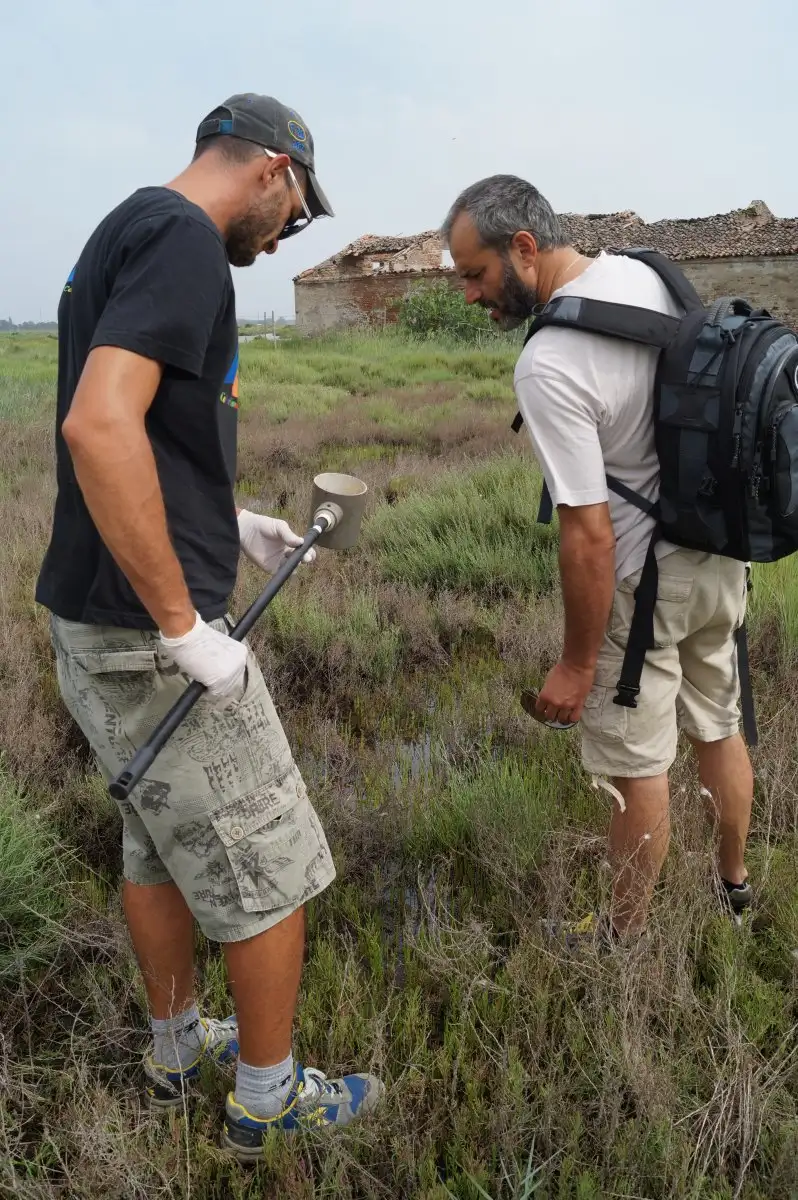
Of course, in '91, the technical and scientific knowledge, of the field and in the field, was really little, we were just starting out; and so in '92 I was offered to work for the whole summer season starting to go around, to inspect, because then in the end, in fact, for a field technician, the work consists just in moving around the territory looking for collections of water where mosquito larvae develop: inside these pits you throw even today a biological product that kills them without impacting the environment, which is highly selective-it only kills mosquitoes and some other insects that are very similar, but are unlikely to be found in the pits themselves.
This work has allowed me not only to deepen my knowledge about mosquitoes but also to deepen my knowledge of the area.
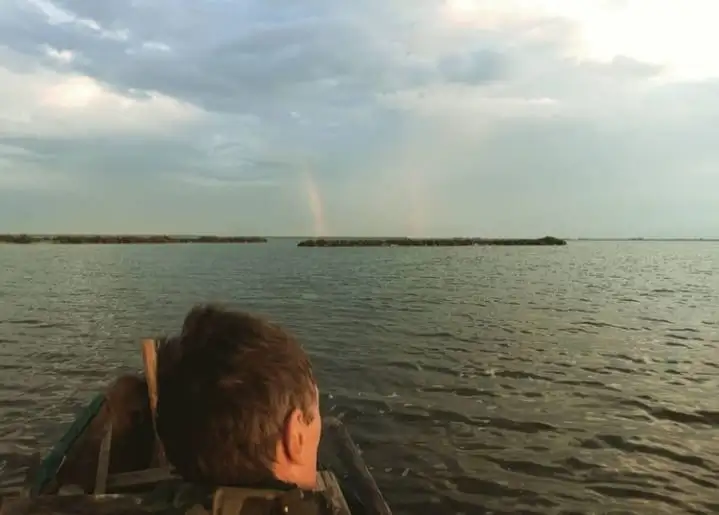
I was passionate about this work from the beginning because in the early years it was really all about discovery: exploring, meter by meter, the whole territory, and I, 30 years later, can say that I know every single ditch, canal, depression... To plumb the area you are certainly not in the center of the country, and so, as a result, a passion also arises for spotting birds, or recognizing plants and all those natural aspects that are part of this ecosystem with enormous biodiversity.
When people ask 'What are mosquitoes for?' or 'What are flies for?' or say that 'we should get rid of them' they don't really know that, at the base of the food chains, and at the base of the life cycle of the ecosystem of the Valleys, of the park, there are also insects. The larvae are food for fish, and the adults are food for bats, for swallows, for all the birds and reptiles, including insectivores, that inhabit this environment.
Of course, in population centers, insects may be unwelcome guests, however, in the end, an environment without insects would be an environment without life because they are the basis of the ecosystem; we probably could not eat eel for example! On the other hand, the mosquito is so present, and develops in such large numbers, because it has learned to alienate itself as much as possible from food chains, trying to survive in environments where, in fact, there are no predators for the larvae.
Doing mosquito control, in an integrated way, with the least impact on the environment, is a challenge that has been taken up by all those who have worked in this center over the years and that has led to a 90/95% reduction in mosquito populations, especially in population centers, without ever harming the environment in a major way.
The balance is crucial, that of our surroundings. Before this project, only insecticides were used - and in many places unfortunately this is still done despite our 30 years of work! If we see a tiger mosquito, for example, it has hatched within a maximum radius of 100 meters from our yard and therefore it is very likely that we are breeding it at home: attention must be paid to the small collections of water where this mosquito is born and develops, without immediately resorting to chemicals that can harm us, our animals, the surrounding environment, - which in fact do not solve the problem because they cull the adult mosquito and not the larva.
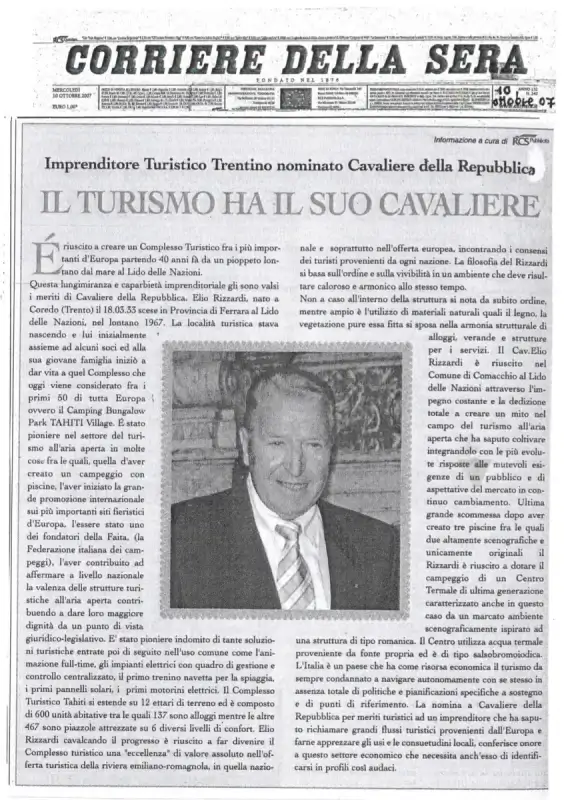
We get complaints and comments about our activity, and it is often not easy to get our point across. Usually our work takes place away from population centers - we start around April with pest control - but it affects the whole area. People do not see us at work and it happens that they do not perceive our intervention: if we did not do what we do, in ralty, the situation would be very different from what it is now!!! Ours is a beautiful but extremely unique environment. My mother, who is from 43 - she is almost 80 years old - was born here and as a child lived in what is now Lido delle Nazioni, which at that time was a small hamlet of houses. There was no tourism and they were always out of the house in the evening, no problem, because back then - when there was still little contamination in the environment - nature took care of the pest control, mosquitoes were matched by predators and the circle was closed.
Years later, we children already knew very well that when it started to set you had to run indoors because clouds of mosquitoes were coming.
Today, fortunately, this is no longer the case: our work has done so much; however, one must always remember that mosquitoes are part of our complex to varied ecosystem and that two little bites, in the evening, one is likely to have to put up with them.
At the time, I had just graduated; I was playing basketball and directing this project was my very dear friend, my former coach, Roberto Pantaleoni, who basically brought this facility to life in Comacchio, with the collaboration of Professor Giorgio Celli of the University of Bologna. I had just graduated, I said; he was looking for a technician to support him on the field in this work, and he knew me because he had precisely coached me, as a young boy, in basketball. Pantaleoni asked me if I would be interested in working together with him on the mosquito control project in Comacchio: I accepted; it was supposed to be a collaboration of a little month, not more, instead, in the end, after 30 years I am still here, at the management, as the most experienced member.
Of course, in '91, the technical and scientific knowledge, of the field and in the field, was really little, we were just starting out; and so in '92 I was offered to work for the whole summer season starting to go around, to inspect, because then in the end, in fact, for a field technician, the work consists just in moving around the territory looking for collections of water where mosquito larvae develop: inside these pits you throw even today a biological product that kills them without impacting the environment, which is highly selective-it only kills mosquitoes and some other insects that are very similar, but are unlikely to be found in the pits themselves.
This work has allowed me not only to deepen my knowledge about mosquitoes but also to deepen my knowledge of the area.
I was passionate about this work from the beginning because in the early years it was really all about discovery: exploring, meter by meter, the whole territory, and I, 30 years later, can say that I know every single ditch, canal, depression... To plumb the area you are certainly not in the center of the country, and so, as a result, a passion also arises for spotting birds, or recognizing plants and all those natural aspects that are part of this ecosystem with enormous biodiversity.
When people ask 'What are mosquitoes for?' or 'What are flies for?' or say that 'we should get rid of them' they don't really know that, at the base of the food chains, and at the base of the life cycle of the ecosystem of the Valleys, of the park, there are also insects. The larvae are food for fish, and the adults are food for bats, for swallows, for all the birds and reptiles, including insectivores, that inhabit this environment.
Of course, in population centers, insects may be unwelcome guests, however, in the end, an environment without insects would be an environment without life because they are the basis of the ecosystem; we probably could not eat eel for example! On the other hand, the mosquito is so present, and develops in such large numbers, because it has learned to alienate itself as much as possible from food chains, trying to survive in environments where, in fact, there are no predators for the larvae.
Doing mosquito control, in an integrated way, with the least impact on the environment, is a challenge that has been taken up by all those who have worked in this center over the years and that has led to a 90/95% reduction in mosquito populations, especially in population centers, without ever harming the environment in a major way.
The balance is crucial, that of our surroundings. Before this project, only insecticides were used - and in many places unfortunately this is still done despite our 30 years of work! If we see a tiger mosquito, for example, it has hatched within a maximum radius of 100 meters from our yard and therefore it is very likely that we are breeding it at home: attention must be paid to the small collections of water where this mosquito is born and develops, without immediately resorting to chemicals that can harm us, our animals, the surrounding environment, - which in fact do not solve the problem because they cull the adult mosquito and not the larva.
We get complaints and comments about our activity, and it is often not easy to get our point across. Usually our work takes place away from population centers - we start around April with pest control - but it affects the whole area. People do not see us at work and it happens that they do not perceive our intervention: if we did not do what we do, in ralty, the situation would be very different from what it is now!!! Ours is a beautiful but extremely unique environment. My mother, who is from 43 - she is almost 80 years old - was born here and as a child lived in what is now Lido delle Nazioni, which at that time was a small hamlet of houses. There was no tourism and they were always out of the house in the evening, no problem, because back then - when there was still little contamination in the environment - nature took care of the pest control, mosquitoes were matched by predators and the circle was closed.
Years later, we children already knew very well that when it started to set you had to run indoors because clouds of mosquitoes were coming.
Today, fortunately, this is no longer the case: our work has done so much; however, one must always remember that mosquitoes are part of our complex to varied ecosystem and that two little bites, in the evening, one is likely to have to put up with them.
You might also be interested in: